

If you’ve ever seen a photo of a white castle rising out of a forested mountainside and thought “that can’t be real”, that’s Neuschwanstein. And yes, it looks exactly like that in person too. This Neuschwanstein Castle travel guide will help you plan the perfect trip to one of Germany’s most iconic destinations. Pair it with the small town of Füssen nearby, and you’ve got one of the nicest day trips (or weekend escapes) you can do in Germany.
Getting to Neuschwanstein Castle
Neuschwanstein is about 120 km southwest of Munich, near a village called Hohenschwangau at the edge of the Bavarian Alps. There is a direct train from Munich HBF to Füssen takes around 2 hours and runs regularly. From Füssen station, bus #73 or #78 drops you at the Hohenschwangau stop in about 10 minutes.
Most people stay in Munich and do this as a day trip, which is totally fine. If that’s your plan, I’d recommend Campanile München Sendling as a base. It’s about 15 minutes from HBF by tram, which means it’s a bit quieter than hotels right around the station. Nothing fancy, but comfortable, and there’s a REWE supermarket on the ground floor which is genuinely convenient. I booked through Agoda for around €45 a night.
If you have more time, combining this trip with Eibsee and the Zugspitze (Germany’s highest peak, nearby) makes for a great two-day Bavarian Alps itinerary.
Best Time to Visit
Late spring to early autumn (May–October) is the sweet spot. The forests are green, the lakes are a vivid blue, and all the trails and viewpoints are open. Summer weekends get busy, so arriving early on a weekday helps a lot.
Winter has a certain magic to it: snow on the castle towers is genuinely beautiful but there are some important things to check before going in the colder months. More on that below.
Important: Marienbrücke with the best view to see the whole castle is often closed in winter (Dec–Feb)
Neuschwanstein Castle

There’s a reason this place ends up on everyone’s travel list. Built by King Ludwig II of Bavaria in the late 19th century, Neuschwanstein wasn’t designed for military use or political power. It was built almost entirely as an expression of Ludwig’s personal obsessions: medieval legends, Wagner’s operas, and a romanticised vision of a world that never quite existed. Construction began in 1869, but Ludwig only ever lived there for a few months before his sudden death in 1886. He never saw it finished.
Of over 200 planned rooms, only around 15 were completed. Despite that, what was built is extraordinary and since 2025, the castle has been officially recognised as a UNESCO World Heritage Site, along with other palaces from the same era.
Fun fact: Neuschwanstein is widely said to have been the direct inspiration for Disneyland’s Sleeping Beauty Castle. Which, when you’re standing in front of it, makes a lot of sense.
Hohenschwangau Castle
Most people walk straight up to Neuschwanstein and miss the yellow castle sitting at the foot of the hill. That’s Hohenschwangau Castle, and it’s worth your time.

This was actually Ludwig’s childhood home, rebuilt by his father King Maximilian II in the 1830s. The interiors are painted with scenes from medieval legends including the story of the Swan Knight, Lohengrin and it’s easy to see how growing up surrounded by all of this fed directly into the grander project on the hill above. The two castles together tell a much more interesting story than either one alone.
The Marienbrücke (Check This Before You Go)
I would like to give you some tips I wish I’d known before my trip in this Neuschwanstein Castle travel guide.
Just above Neuschwanstein sits Marienbrücke (Mary’s Bridge), a narrow bridge spanning a gorge high above the Pöllat waterfall. It’s the viewpoint everyone uses for that wide, sweeping photo of the castle – the one that shows the whole thing framed by forest and mountains. It’s genuinely the best spot to take it all in.
The problem is: the bridge is frequently closed during winter, usually from around December through February, because of ice and snow making it too dangerous. I didn’t know this before I went. I visited in the middle of winter, walked all the way up, and found it closed. The weather wasn’t great either, so I missed out on that full view I’d been imagining.
Honestly, it was a little disappointing. But even without the bridge, even in grey weather, Neuschwanstein is still something. Standing below it, looking up at those towers rising out of the trees, it just has this quiet, imposing presence. I still don’t regret going. I just wish I’d checked first.
Before your visit, you can check the current status of the Marienbrücke and other nearby points of interest (including the “Jugend” viewpoint, the Alpsee circular trail, the Alpseebad, and the Pöllatschlucht Hiking Trail) at hohenschwangau.de.
Practical Info:
If you just want to see the castle outside, you can do it for free. However, if you want to go inside to explore, here are some information:
- Tickets: €21 per adult, children under 18 free, some discounts are available for certain groups. Tours are guided and take about 30 minutes. Book online in advance, walk-up tickets often sell out, especially in summer.
- Getting to the castle: 30–40 minute uphill walk from the ticket centre, or take a horse-drawn carriage partway.

- Opening hours:
- Apr–Oct: 9 AM–6 PM
- Oct–Mar: 10 AM–4 PM
The Lakes: Alpsee & Schwansee
After the castle, don’t leave the area without walking by the lakes. There are two right nearby, and both are worth a slow wander.
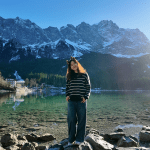
Alpsee is the larger one, sitting right next to Hohenschwangau Castle. The water is frozen during the winter and there’s a 5 km circular trail that loops around the entire shore with views of both castles along the way. In summer, you can also rent rowing or pedal boats.

Schwansee (Swan Lake) is smaller and quieter, tucked a bit further off the main path between Hohenschwangau and Füssen. It sits inside a nature reserve alongside Alpsee, and has a noticeably more peaceful feel. The trail around it connects back toward Füssen, making it a nice way to end the afternoon on foot.
Füssen – The Town Worth Slowing Down For

After the hike and the castle, Füssen is the perfect place to decompress. It’s a small Bavarian town at the southern end of the Romantic Road, and it has a completely different energy from the crowds up at the castle – quiet, low-key, and genuinely pleasant to wander through.

The old town is full of brightly painted buildings: mustard yellows, soft greens, terracotta reds, each with decorative facades in traditional Bavarian style. There’s a 9th-century monastery and an elevated palace (Hohes Schloss) that frame the skyline. It’s not a place with a packed list of attractions, it’s more the kind of town where you just walk around, find a good café, and let the afternoon go slowly.

Lechfall – Don’t Skip This
One specific stop: the Lechfall (Lech Falls), about a 10–15 minute walk from the town centre.

It’s technically a man-made waterfall, built in the 18th century over the River Lech but none of that background changes what you actually see when you get there. The water drops around 12 metres over a series of stone steps, and the colour is the thing that gets you. Because the Lech carries glacial meltwater down from the Austrian Alps, the water runs this vivid, almost unreal turquoise-green. Depending on the light and the season, it can look anywhere from pale blue to a deep, saturated emerald. Honestly one of those colours that makes you check if your camera is doing something weird.
The best view is from the König-Max-Steg bridge that crosses right above the falls. In summer the colour is at its most vivid. In winter, the falls partially freeze over while the rest keeps running and beautiful in its own way.

It’s free, it’s close, and it takes maybe 30 minutes. Absolutely worth the small detour.
Final Thoughts
Neuschwanstein and Füssen together make for a day that covers a lot: history, mountains, lakes, a quiet little town, and one very photogenic waterfall. The castle alone is worth the trip from Munich, but everything around it adds up to something more than just a single famous landmark.
Just check the Marienbrücke status before you go. Seriously, learn from my mistake on that one. For tickets, trail conditions, and point-of-interest status: hohenschwangau.de
I hope that this travel guide about Neuschwanstein Castle with Füssen town brings some useful information for you.
Have you had any questions or experiences to share? Feel free to drop a comment below.




Leave a Comment