
This Japan travel itinerary 2 weeks guide will help you plan a balanced trip through Tokyo, Kyoto, and the Mt. Fuji area.
Japan has always been number one on my list. Not in a vague, someday kind of way, but in the specific way that a place gets into you long before you ever set foot there.
It started with Doraemon and Conan when I was young. Those manga quietly became part of my childhood and through them Japan started to feel strangely familiar. Then came my Ghibli phase, which honestly never ended. There’s something in those films that no other cinema has ever replicated for me, a particular quality of stillness and emotion that I find hard to name. The soundtracks are still what I put on when I need to focus. So when 2024 finally arrived and I was on a plane heading to Tokyo, it felt less like a first visit and more like something long overdue.
One Week in Tokyo (Japan Travel Itinerary 2 Weeks)
I gave myself a full week in Tokyo, which felt generous at the time and still wasn’t quite enough.
Where I Stayed in Tokyo
For the Tokyo part of this Japan travel itinerary 2 weeks, I stayed in Bayside at Hotel Trusty Tokyo Bayside. The room was small in the way that most Tokyo rooms are, but spotlessly clean and well-equipped. The breakfast buffet alone was worth it, genuinely one of the better hotel breakfasts I’ve had anywhere.
Most people stay closer to the centre and I understand why. But Bayside gave me something I didn’t know I was looking for. A quietness that central Tokyo doesn’t really do. Walking outside in the morning, just the city stretching out in front of me, I felt a kind of deep connection to the place. It’s a different version of Tokyo, lighter and more spacious and I think it made the whole trip feel more personal. If you’re visiting for more than a few days, I’d genuinely recommend it.
While you’re in the area, Miraikan (The National Museum of Emerging Science and Innovation) is worth a half-day visit. It’s thoughtfully put together and covers everything from robotics to space exploration in a way that doesn’t feel overwhelming.

I also often walked around Odaiba and DiverCity.
For a shorter stay or if easy transport is the priority, Hotel Villa Fontaine Nihombashi Hakozaki is the practical choice. A few minutes’ walk to trains and buses, and there’s a direct bus to the airport which made my last day considerably less stressful.
Getting Around Tokyo
Asakusa and Senso-ji Temple was the first stop. One thing worth knowing before you go: the famous spots in Tokyo are genuinely, significantly crowded. Senso-ji is no exception. The narrow approach street can fill with people to the point where you’re barely moving. Go early if you can or simply accept it as part of the experience.
Samurai Ninja Museum Tokyo was a deliberate choice because my style of travel tends toward doing things over seeing things. The museum itself is smaller than I expected, but wearing samurai armour and learning to throw shuriken like a ninja turned out to be exactly as entertaining as it sounds. Book in advance through Agoda or directly, as you might have to wait.

For views over the city, especially at sunset time, Shibuya Sky is the premium option and requires booking ahead. You can also go to Tokyo Metropolitan Government Building, which offers impressive city views for free.

The Shibuya Scramble Crossing is a must because it’s one of those rare urban spectacles that actually lives up to the photographs. While you’re there, look for the Hachiko Statue. If you haven’t seen the film Hachiko yet, consider to watch it before you go. It will ruin you in the best possible way, especially if you’re a dog person. After all of that, Shibuya Yokocho is a good place to decompress with a beer and some street food in the evening.
I was working during this week so there were some places saved for next time: Meiji Jingu, Ghibli Museum, Imperial Palace (requires advance booking).
4 Days in Kyoto (Japan Travel Itinerary 2 Weeks)
Kyoto was where I finally had a full week to travel. So here comes my itinerary:
Day 1 – Afternoon: Kibune

13:00 Head to a Café in the Kibune area. It’s the kind of place that feels tucked away from everything.

15:00 Visit Kifune Shrine. Unlike temples, which are Buddhist and often have statues or pagodas, shrines belong to Shinto and usually feature a torii gate at the entrance.

Then make your way back to Kyoto (around 20:15). Stop at a convenience store on the way back. Japanese convenience store food is genuinely good and not a compromise at all.
Day 2 – Amanohashidate and Ine
I bought a day tour for this route and I’d recommend doing the same. The reason is simple: getting there independently by bus or train takes almost twice as long. The tour I joined wasn’t a structured group thing either. They drove us there and gave us free time to explore on our own, only stepping in to provide transport and some context along the way. Relaxed and efficient.
The route covered Amanohashidate (one of Japan’s three views, a pine-covered sandbar stretching across a bay). You can have an once-in-a-lifetime solo capsule experience here.

Then Ine, where you can rent a bicycle for free (more information here) and ride along the town or stay in a coffee shop with the beautiful sea view.

The journey back to Kyoto takes around two hours.
In the evening, I walked through Gion and visited Hokanji Temple (Yasaka Pagoda). Kodaiji Temple is optional but beautiful. End the night along the Kamo River, where half of Kyoto seems to gather in the evening just to sit by the water.

Day 3 – Arashiyama and Nara
07:00 Take the bus to Togetsukyō Bridge in Arashiyama, about 40 minutes from the city centre. Go early. The bamboo forest is one of those places that photographs have almost over-exposed, but in person at dawn, before the crowds arrive, it genuinely earns its reputation. The path through the forest is about 900 metres. Slow down and let it work on you.
Lunch at Arashiyama Itsukichaya, then make your way to Nara Park, around 75 minutes by transit.

In Nara, the deer really do just wander freely among everyone. It’s surreal in a completely ordinary way. People often feed the deer and if you offer them treats they will bow, which feels surprisingly polite. Beyond the deer, the temple complex is extraordinary. Kofuku-ji, Kasuga Taisha, Todai-ji with its enormous bronze Buddha, and if your legs still have something left, Mt. Wakakusa for a view over the whole area. End with a wander along Sanjo Dori for food before heading back to Kyoto.
Day 4 – Mt. Fuji Area
07:00 Shinkansen from Kyoto, then a connecting bus to Kawaguchiko, the town at the base of Fuji. Total journey around four hours. Arrive around 11:30, check in and rest.
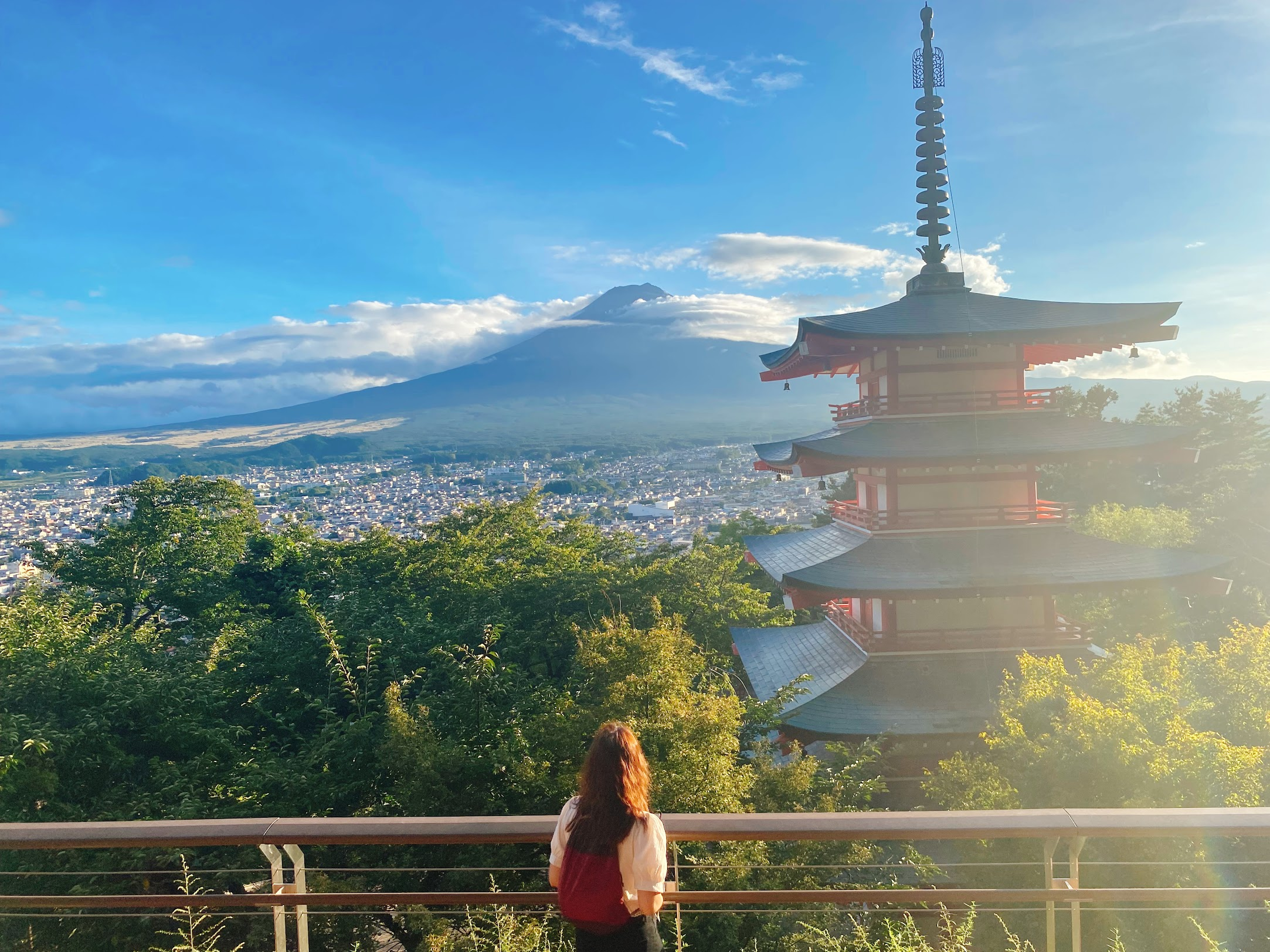
14:00 Walk along Lake Kawaguchi and visit Arakurayama Sengen Park, the hillside spot with the five-storied pagoda and Fuji in the background. It’s the image you’ve seen in every Japan travel photo. Seeing it with your own eyes still surprises you.
What to Eat in Japan
I could spend an entire post just on food, and honestly I probably should. There are too many good places to name here, so I’ll put together a Google Map with everything saved [link here] but a few things you absolutely cannot leave without trying:
Unaju (grilled eel over rice) is one of those dishes that sounds simple and then completely floors you. The eel is lacquered with a sweet soy glaze and served over steamed rice in a lacquered box. It’s rich and deeply savoury in a way that’s hard to describe until you’ve had it.

Japanese beef – whether as Wagyu, Kobe, etc – is not the same as beef anywhere else. You’ll understand immediately why people make a fuss about it.

Onigiri from a convenience store sounds unremarkable until you realise that Japanese convenience store onigiri is genuinely one of the best quick meals in the country.

Sushi eaten at a proper sit-down counter, where the chef hands each piece to you directly, is a completely different experience from what most of us grew up eating. If budget allows, do it at least once.
Ramen is worth seeking out in each city because regional styles vary significantly. Tokyo tends toward soy-based broths while Kyoto leans lighter and more refined. Follow your nose and don’t overthink it.

And finally: matcha everything. Matcha ice cream, matcha latte, matcha cake in a tiny shop in Kyoto’s backstreets. Japan takes green tea seriously and it shows.

Getting Around In Japan
Japan’s transport system is one of the best in the world, and once you understand the basic logic of it, moving around becomes genuinely effortless.
Suica card is the first thing to sort when you land. Buy it at the airport, because it’s not always easy to find elsewhere. It’s a rechargeable IC card that you tap to board almost any local train, subway or bus across the country. You can top it up at train station machines, airport kiosks or convenience stores. Keep it in your pocket and just tap in and out without thinking about it.
For getting between cities, the Shinkansen (bullet train) is a separate system and requires its own ticket, bought at the station or in advance online. It does not come out of your Suica balance. The Tokyo to Kyoto leg runs around 10,000 yen and takes roughly two and a half hours. Book ahead if you’re travelling during peak periods.
Once you’re in Kyoto, the city runs largely on buses. The key tip here: buy a day bus pass directly from the driver when you board. Just tell them you’d like a day pass, hand over the exact amount in cash (prepare it beforehand, the machines don’t always give change), and tap on and off for the rest of the day. It is significantly cheaper than paying per ride, especially if you’re covering the temple districts. Kyoto is not a small city to walk across so you’ll use it more than you expect.
A few thoughts
This Japan travel itinerary in 2 weeks felt very simple in a way that stayed with me. Quiet moments, small details, delicious food, a sense of connection rather than constant excitement. If I go back I would keep the same pace because it allowed me to notice more of what makes Japan feel like Japan.
I’ll be back to see cherry blossom one day.
Have any questions or experiences to share? Kindly drop a comment below!





Leave a Comment